
Identifying the wood of an antique piece is one of the most direct ways to approach its history, intention, and value. Among the most respected materials in traditional cabinetmaking is oak—a wood long admired for its strength, durability, and commanding presence. For centuries, oak was chosen for furniture meant to endure, and learning to recognize it allows us to better understand the purpose behind each object.
One of the first indicators of oak is found at the surface. When observed closely, its grain is clearly defined and its texture unmistakable. Oak is never completely smooth to the touch; its open pores give it a subtle roughness that distinguishes it from softer woods. This tactile quality is one of the most reliable signs of genuine oak.
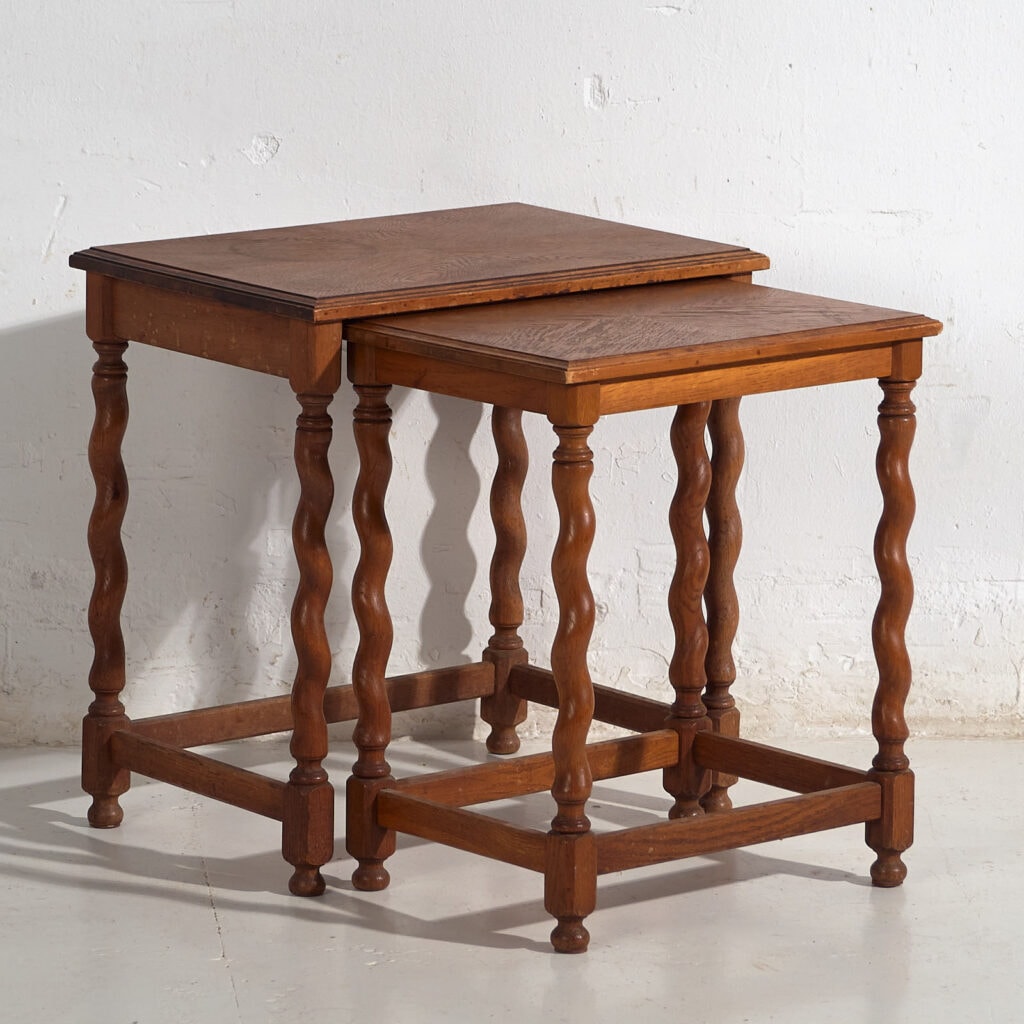
Colour also offers valuable clues. Oak typically ranges from light brown to warm golden tones, developing over time a deep, elegant patina. Exposure to light and daily use gradually darken the wood, enriching its colour and reinforcing its sense of solidity and permanence.
Weight is another revealing factor. Oak is a dense, heavy hardwood, and furniture made from it conveys an immediate impression of firmness. When compared with a pine piece of similar dimensions, the difference is often evident: oak feels more substantial, more anchored, as if designed to remain in place for generations.
A closer examination may reveal one of oak’s most distinctive features: the so-called mirrors or rays. These appear as subtle, luminous markings—small lines or reflective patterns formed by the medullary rays of the wood. Unique to oak, they are among the most reliable visual indicators when identifying antique pieces.
Unlike many other woods, high-quality oak selected for furniture typically contains few knots. Its surfaces tend to be uniform, allowing the natural grain to take prominence. This was a deliberate choice, reflecting both technical knowledge and a desire to create pieces that were structurally sound and visually balanced.

Recognising oak in antique furniture requires time, patience, and a trained eye. Its open grain, substantial weight, aged patina, and characteristic rays speak of durability and intention. Understanding these details is also a way of appreciating the craftsmanship of another era—when furniture was made not only to serve a function, but to last, to age with dignity, and to accompany life across generations.