
The garden or terrace are a natural extension of the home, spaces where time seems to pass in a different way. Furnishing them is a way of inviting calm, long conversations and shared moments outdoors. In this context, metal garden chairs occupy a special place. They are resistant, durable and, when it comes to antique models, they bring a character and personality that is difficult to find in contemporary furniture.
The material from which they are made largely defines their appearance and their history. Cast iron and wrought iron are undoubtedly the main protagonists of classic garden chairs. Wrought iron, hot-worked, allowed craftsmen to create scrolls, spirals and unique ornamental details, while cast iron, molded in pieces, made it possible to repeat decorative motifs with great precision. Both options are notable for their weight and stability, qualities that make them particularly sturdy, although they do require some care against rust. Traditionally, these chairs were protected with layers of paint, often in dark tones such as black or green, colors closely associated with period gardens.
As the 20th century progressed, metal adopted a completely different language. Steel, and especially tubular steel, began to be used in lighter and more functional designs. Influenced by the modern movement and the Bauhaus, these chairs were all about clean lines, simple curves and a practical aesthetic that broke with the ornamentation of the past. They were designed to be comfortable, stackable and accessible, and today they are considered true design icons.
Aluminum, although more present in later designs, also had its place in the garden furniture of the mid-twentieth century. Its lightness and resistance to oxidation made it especially practical, although its aesthetics are usually more sober and industrial in character.

Beyond the material, the style of a metal garden chair transports us directly to a specific era. Victorian and Belle Époque-inspired pieces stand out for their abundant decoration, with plant motifs, trellises and sinuous forms that evoke romantic and elegant gardens of the late 19th and early 20th centuries. In many cases, these designs were combined with wooden seats, creating an interesting contrast of materials.
At the other extreme are the modernist-style chairs, where function prevails over form. Their tubular steel structures, straight lines and balanced proportions reflect a new way of understanding design, more rational and oriented to everyday use.
In between the two worlds is the rustic or colonial style, with simpler but equally solid designs that convey tradition and a sense of stability. These chairs, often painted in light or neutral tones, fit naturally into cozy, timeless gardens.
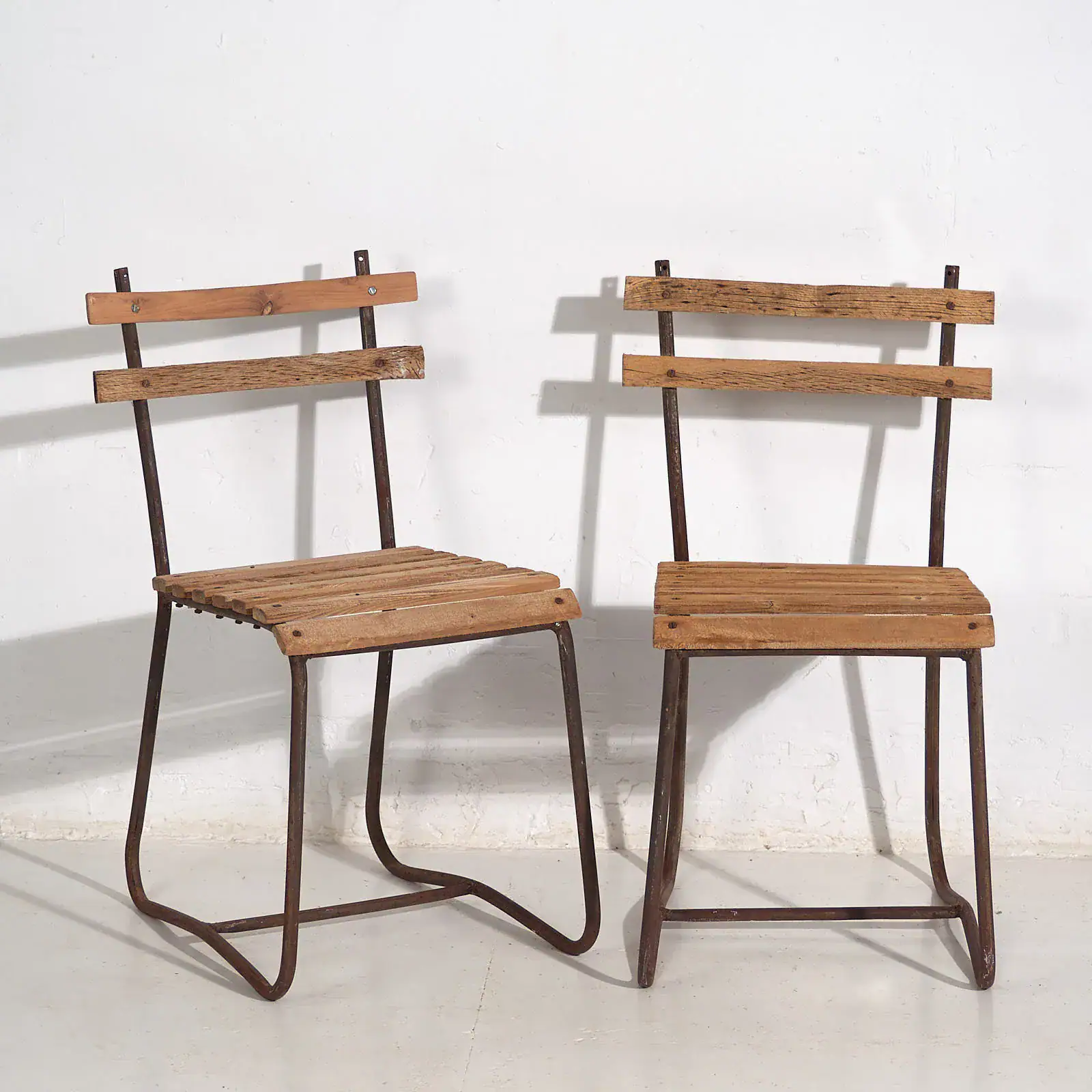
Recognizing and appreciating an antique metal chair involves taking a close look at it. Weight, small imperfections typical of craftsmanship, visible welds or a patina of even wear are usually good indications of age. The passage of time leaves its mark on the paint and metal, and this natural wear is part of its charm, as long as it does not compromise the structure of the piece. Knowing the most emblematic designs also helps to place them in their historical context and to understand their value.
Choosing an antique metal chair for the garden is not just a practical decision. It is to bet on a piece with history, capable of transforming an outdoor space and accompanying lived moments. Whether through the ornate elegance of a Victorian chair or the functional sobriety of a modernist design, these pieces remind us that design, even outdoors, can also tell stories.