
In the world of furniture and objects made of natural fibers, it is very common for the terms wicker and rattan to be used as if they were the same thing. At first glance, both evoke lightness, tradition and a craftsmanship that connects with the natural. However, although they are closely related, they are not exactly the same. Knowing the difference not only helps to better identify an antique piece, but also to appreciate its quality, durability and the value of the work behind it.
Rattan is, in essence, the origin of everything. It is a natural raw material that comes from a climbing plant of the palm family, which grows in the jungles of Southeast Asia. Its stems are long, solid and surprisingly flexible, a combination that has made it an ideal material for centuries for the manufacture of furniture and resistant objects. In many antique pieces, rattan is used as is, forming the main structure of the furniture, that part that supports the weight and gives it stability.
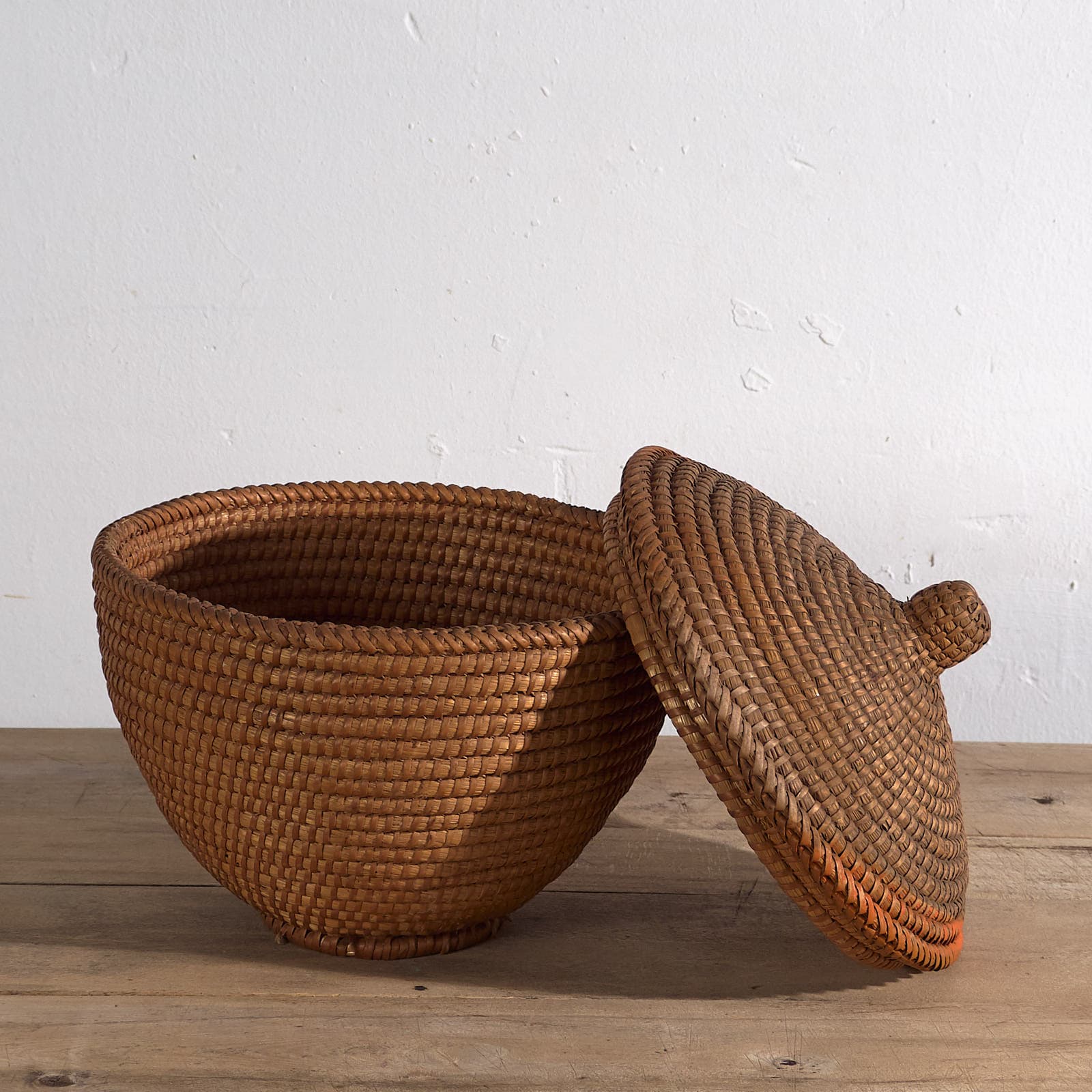
From that same rattan stem comes the wicker. When the outer bark is peeled off and cut into thin, manageable strips, the material we know as wicker is obtained. Thus, wicker is not a plant in itself, but a way of working rattan. These flexible strips are interwoven by hand to create woven surfaces, giving rise to baskets, backrests, seats and all kinds of objects where the braiding is the protagonist.
The difference between the two materials is clearly perceived when a piece is carefully observed. Rattan is usually shown in thicker and rounder elements, visible in the frame of the furniture or in the structural parts. Wicker, on the other hand, appears in woven form, creating delicate patterns reminiscent of traditional basketry work. One brings strength and solidity; the other, lightness and detail.
Its main use is for weaving. These strips are intertwined to create different objects. The wicker gives the characteristic braided basket look.
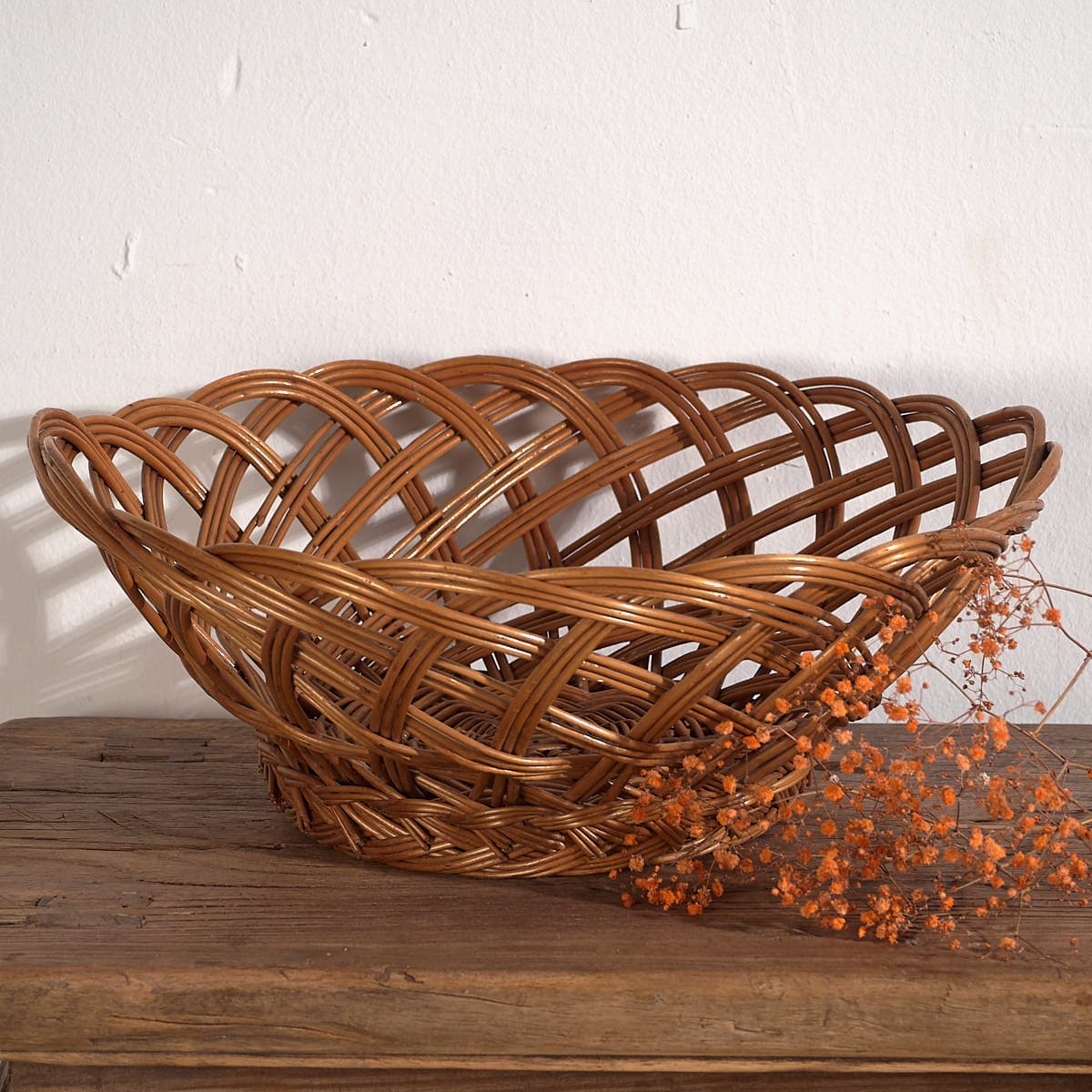
Understanding this distinction allows us to look at antique furniture and objects with different eyes. A basket, an armchair or a trunk are no longer just decorative pieces, but the result of a balance between strength and flexibility, between raw material and craftsmanship. Recognizing where rattan ends and wicker begins is also a way of appreciating the time, the technique and the hands that shaped each object.
The next time you stop in front of a piece of this style, pay attention to its details. In the curves of the frame, in the patient braiding of the strips, in the small irregularities that speak of a work done by hand. Because it is in these nuances that the true beauty of furniture and objects with history is hidden.