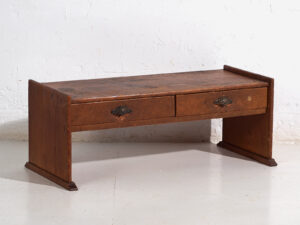
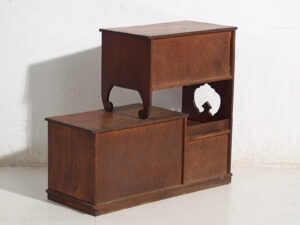
Compact Japanese tabletop Tansu – Meiji Period (c.1890-1910)
- Dimensions: Length: 61 cm Depth: 24 cm Height: 25 cm
- Style: Meiji
- Materials and techniques: Sugi (Japanese cedar)
- Place of origin: Japan
- Period: Late Meiji
- Date of manufacture: Circa 1890-1910
- Condition: Good. Wear commensurate with age and use.
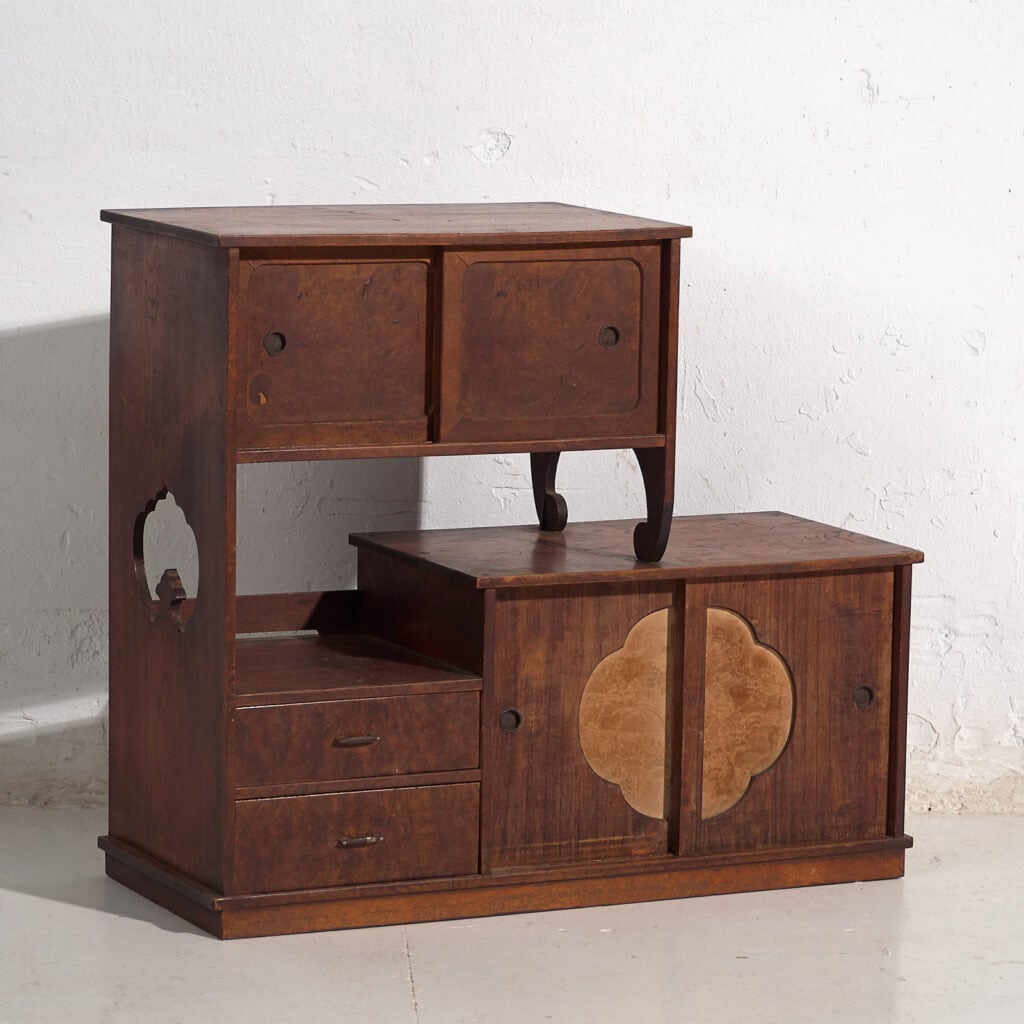
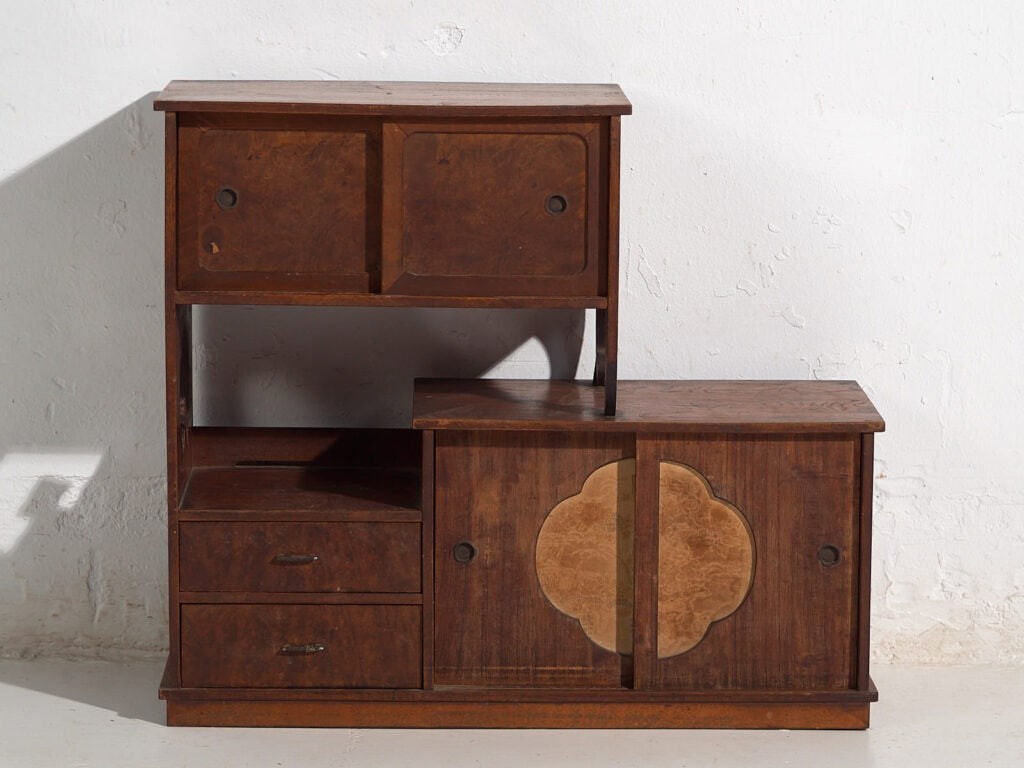
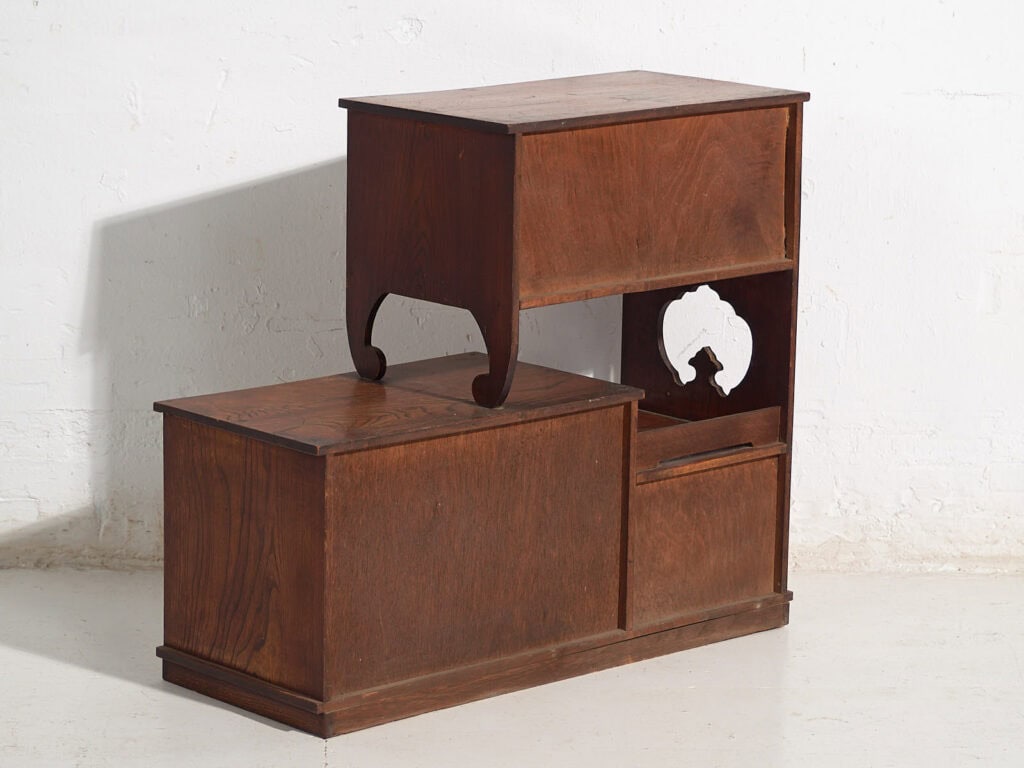
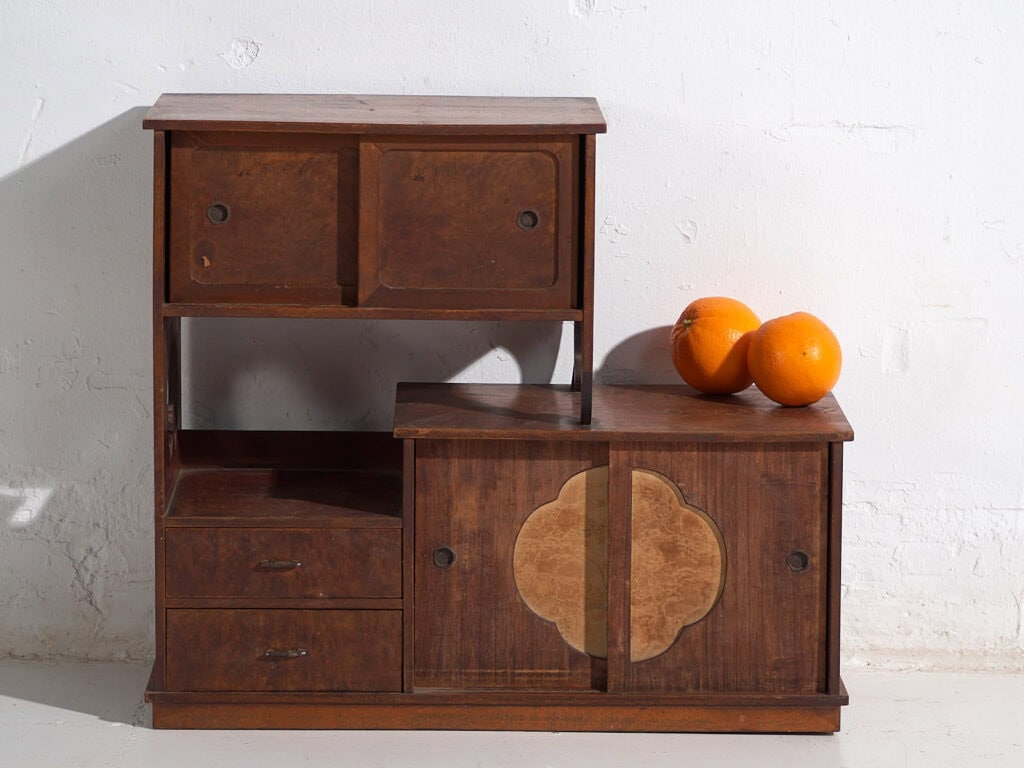
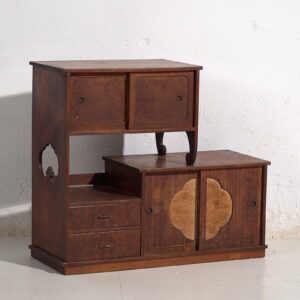
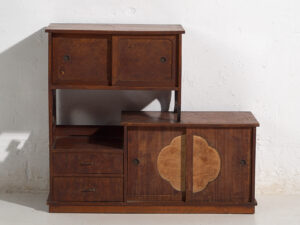
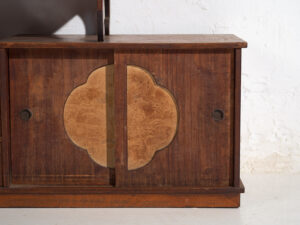
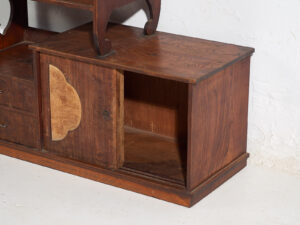
Small Japanese storage tansu, crafted in solid wood, with a compact, stepped format combining sliding doors, drawers, and open compartments, dated to the late Meiji period.
Due to its reduced dimensions—61 cm in length, 24 cm in depth, and 25 cm in height—this piece was conceived to be used on a surface: an auxiliary storage unit intended for organizing small objects, household utensils, documents, or personal items. This type of tansu reflects a flexible, intimate approach to everyday use, characteristic of late 19th-century Japan.
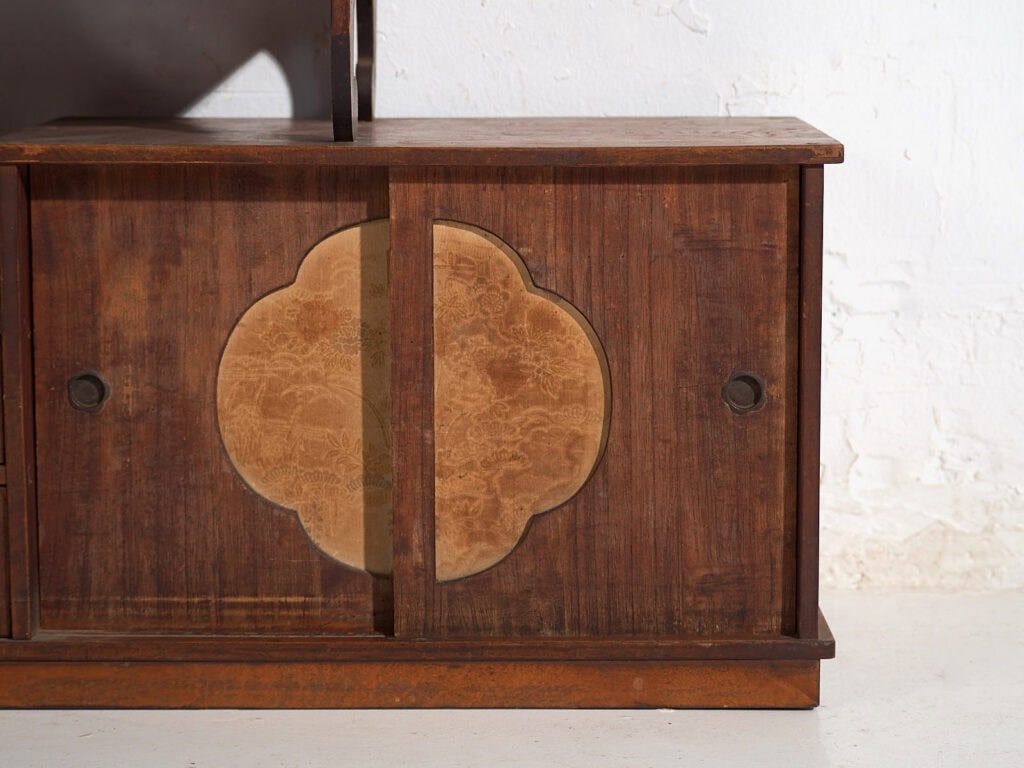
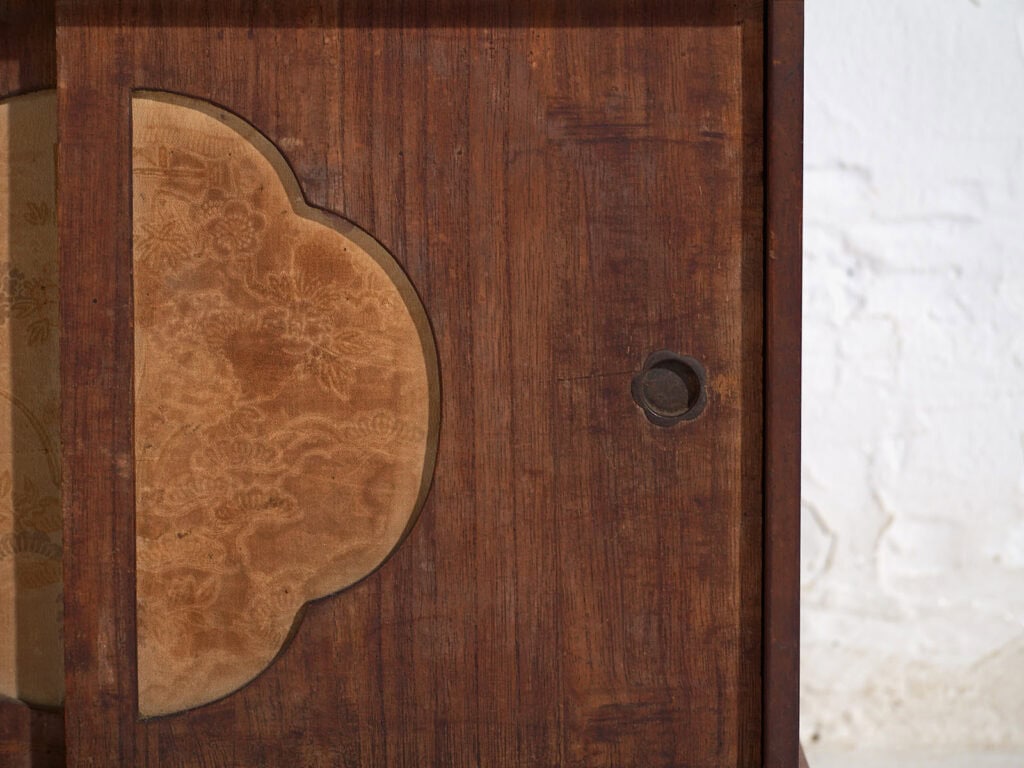
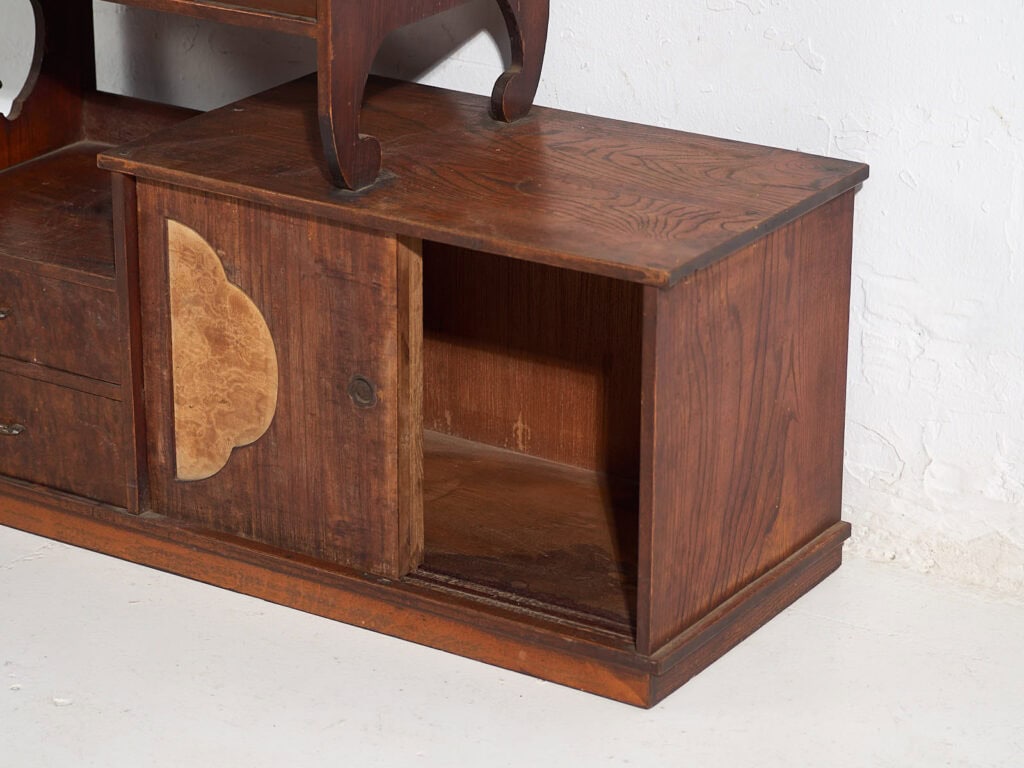
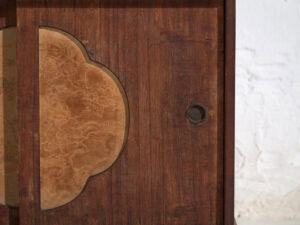
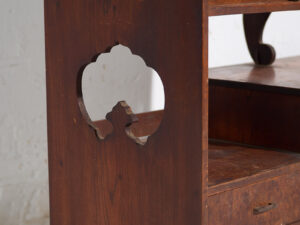
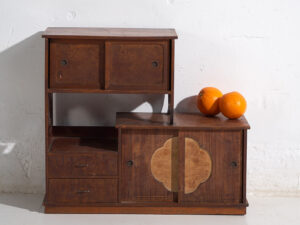
The lower section features sliding doors decorated with cut-out panels that hold original decorative paper with subtle vegetal motifs. Common in the Meiji period, this resource introduces visual lightness and a poetic dimension without excessive ornamentation. The paper shows natural aging consistent with its age.
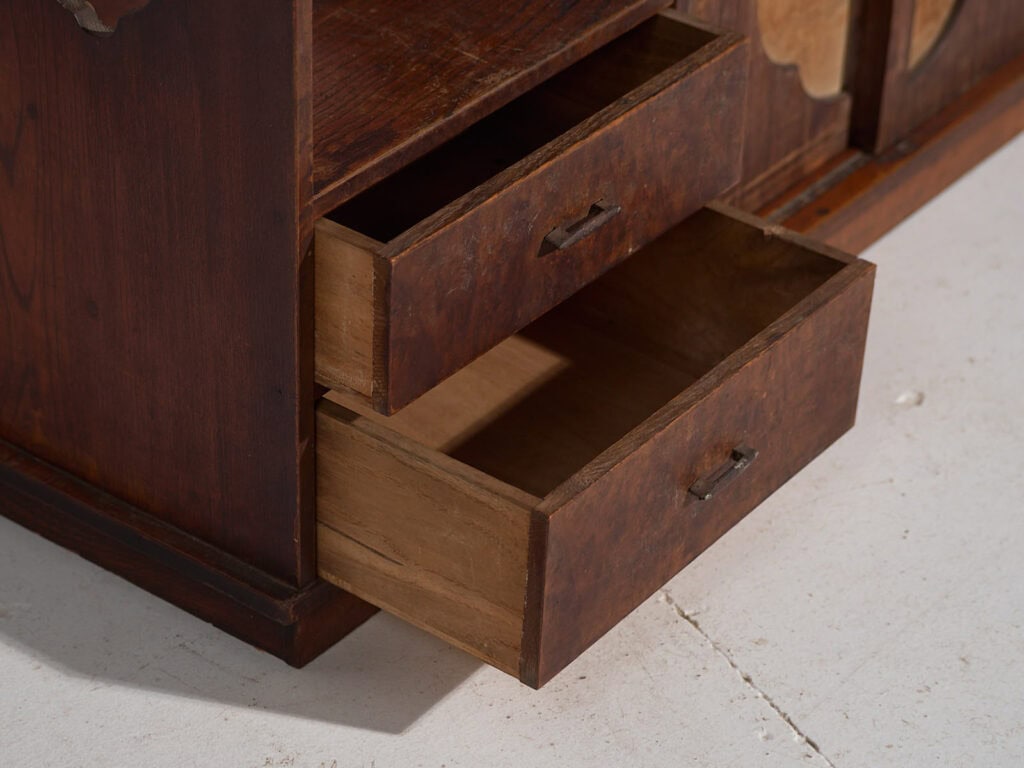
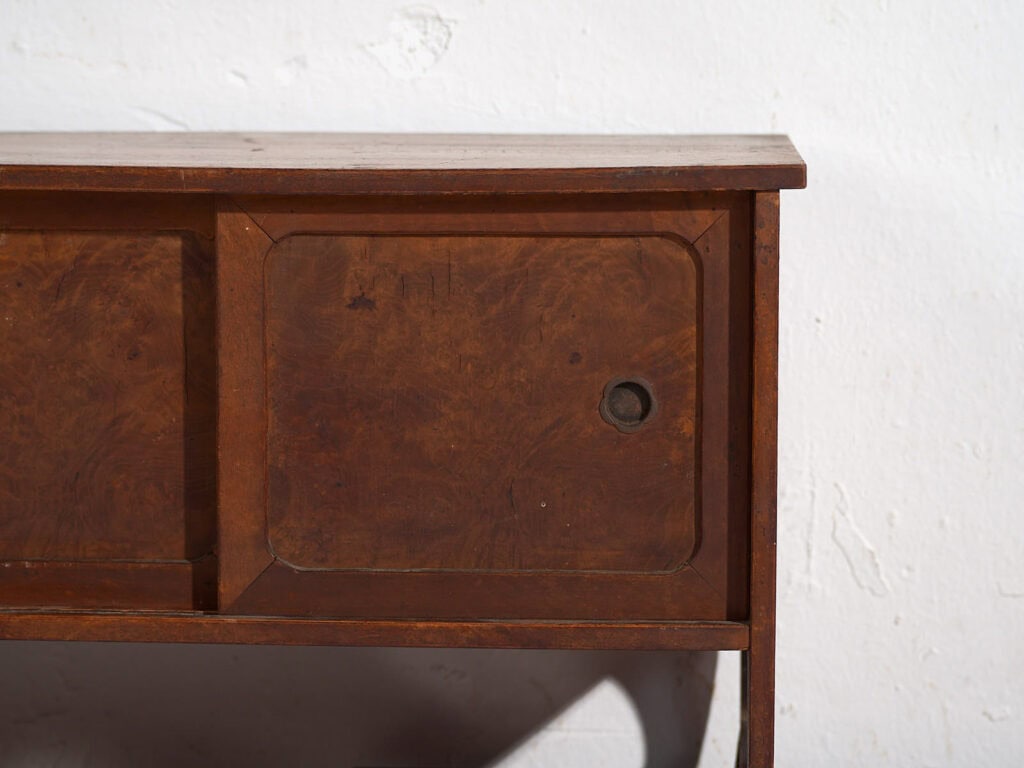
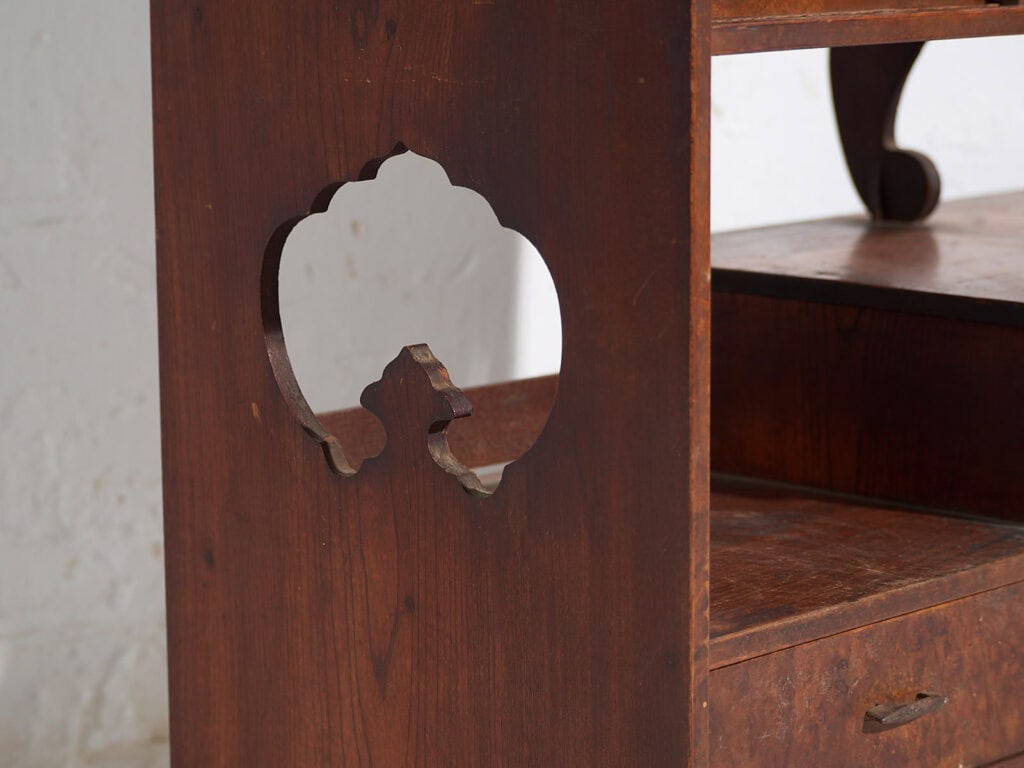
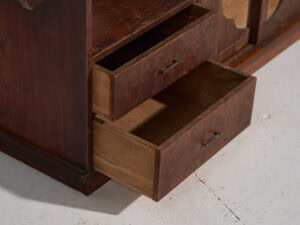
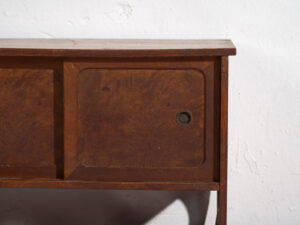
The upper and lateral sections incorporate small drawers and open compartments, arranged in an asymmetrical yet balanced composition. The circular handles and metal fittings are original, made of dark iron, with uniform wear that integrates naturally into the overall piece.
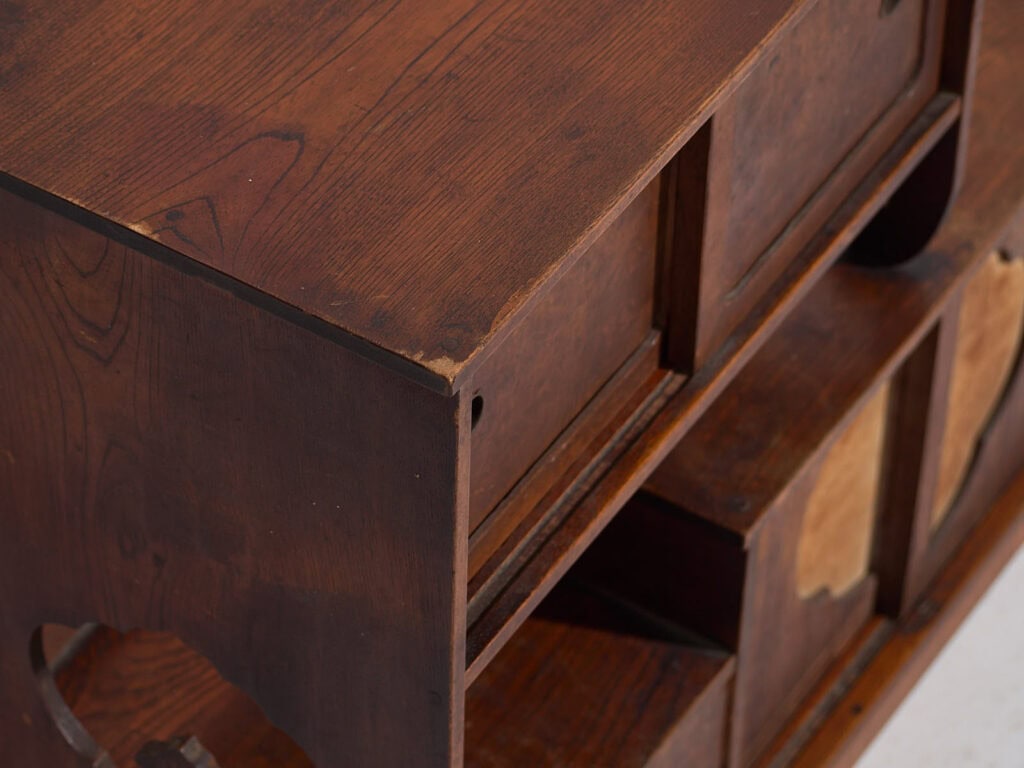
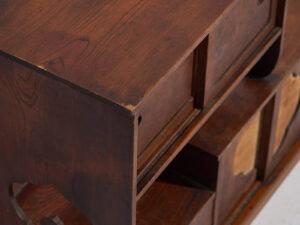
The wood displays a warm, deep patina, with softened edges, signs of use, and tonal variations resulting from the passage of time. Based on its straight grain, soft texture, and structural lightness, the piece appears to be primarily made of sugi (Japanese cedar), the most common wood used for this type of domestic tansu during the Meiji period. In frames or localized areas, a slightly denser wood may be present, which is typical of this type of construction.
The piece is in good structural condition, with visible yet balanced wear, and without invasive restorations or alterations that would compromise its original reading. Intimate and understated, it works particularly well in contemporary interiors as a character piece, placed on a table, sideboard, or desk.
The state of conservation is optimal, except for the characteristic imperfections of any antique produced by the passage of time.
Give a point of originality to your home with a unique piece, which merges with the contemporary style bringing personality to your home. This small antique Japanese cabinet can be combined with any of our chests of drawers or with our available antique stools.
ONE OF A KIND