
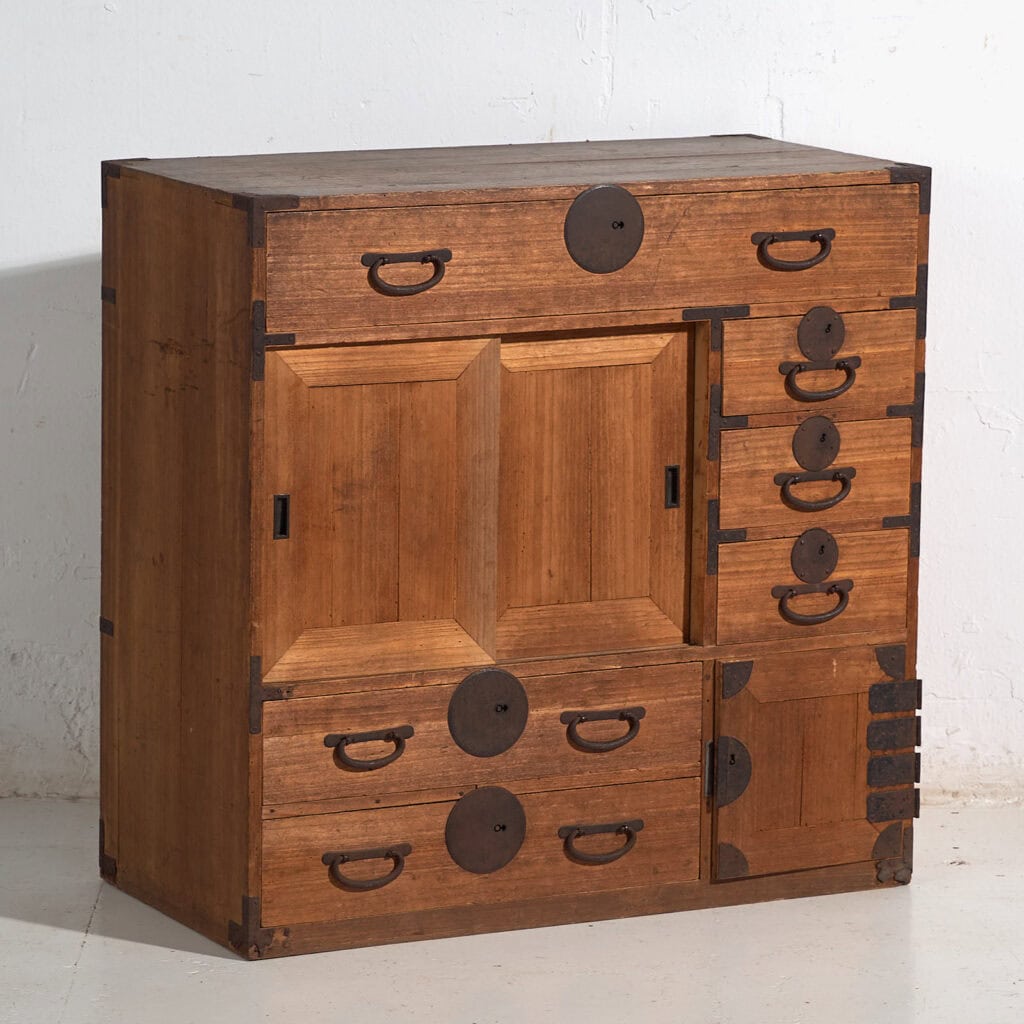





Antique storage chest – Meiji / Taishō period (c.1868-1926)
- Dimensions: Length: 78 cm Depth: 39 cm Height: 77 cm
- Style: Meiji
- Materials and techniques: Paulownia (Paulownia spp.)
- Place of origin: Japan
- Epoch:Late Meiji, early Taishō period
- Date of manufacture: Circa 1868-1926
- Condition: Good. Wear commensurate with age and use.
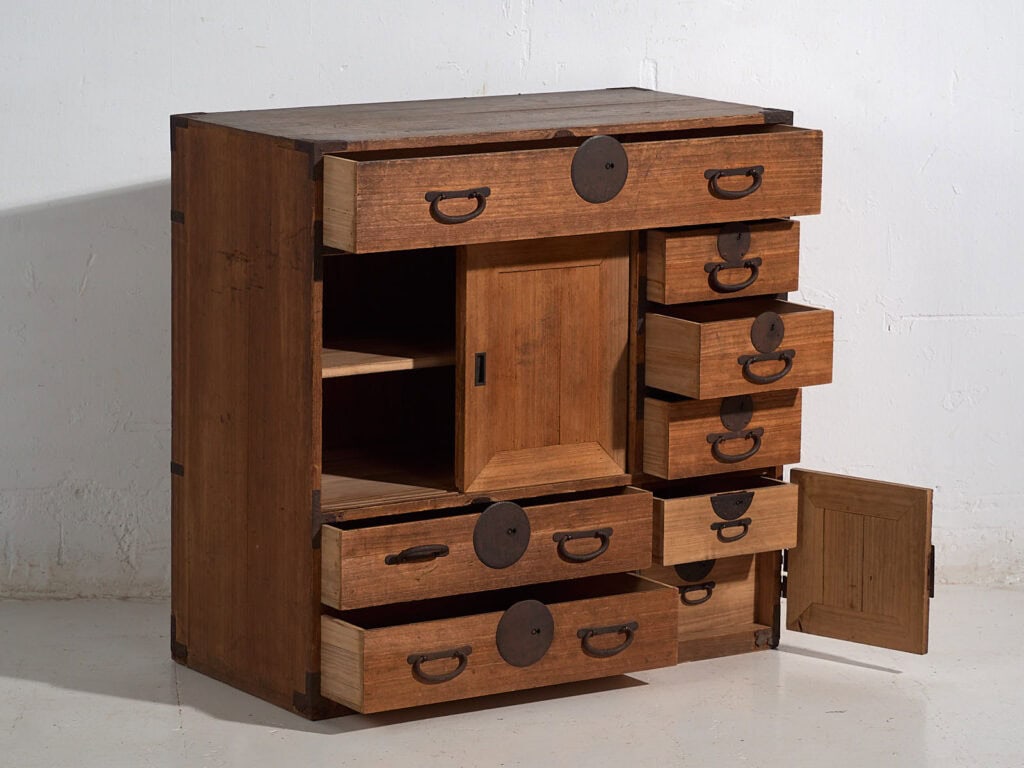
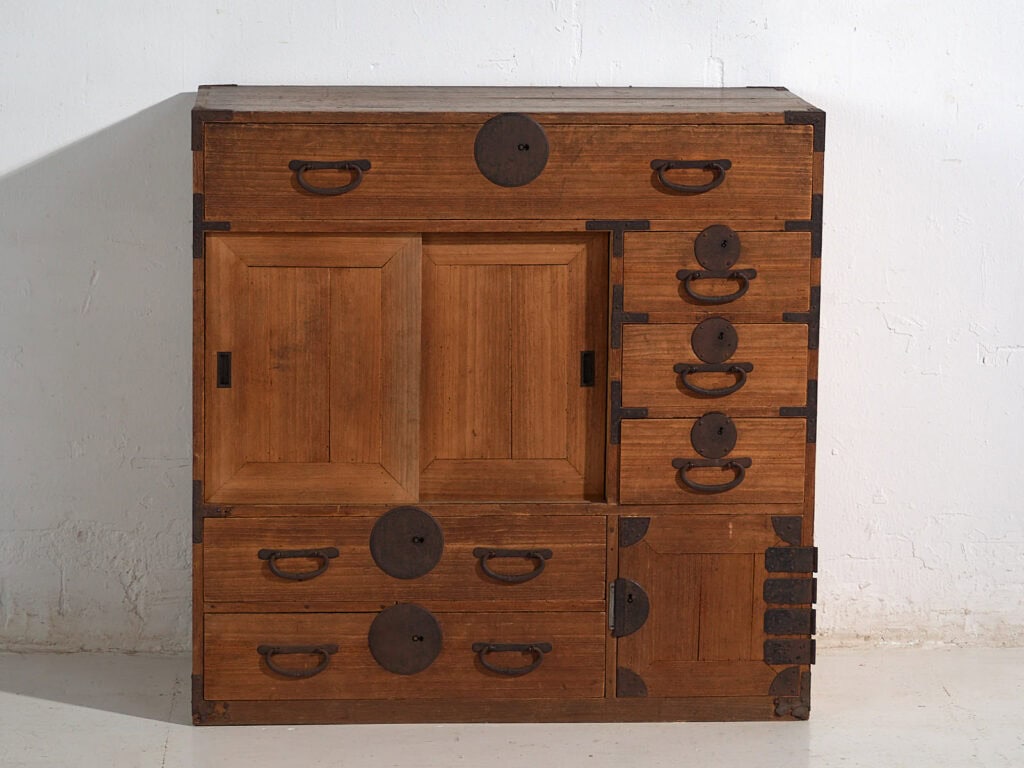
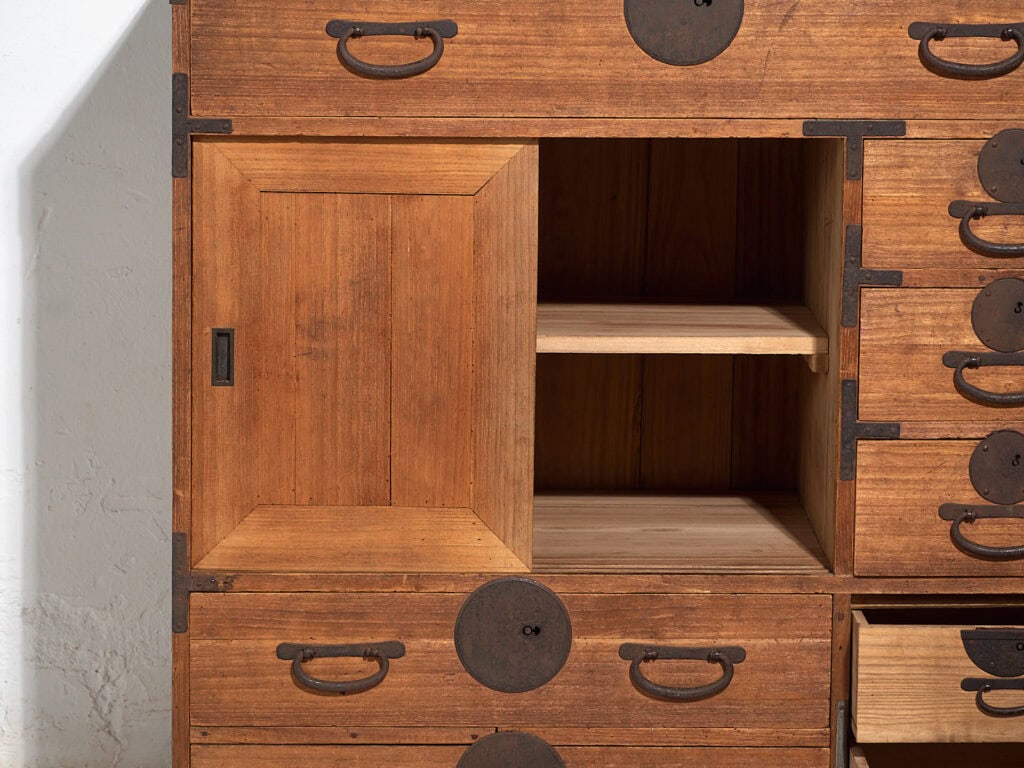
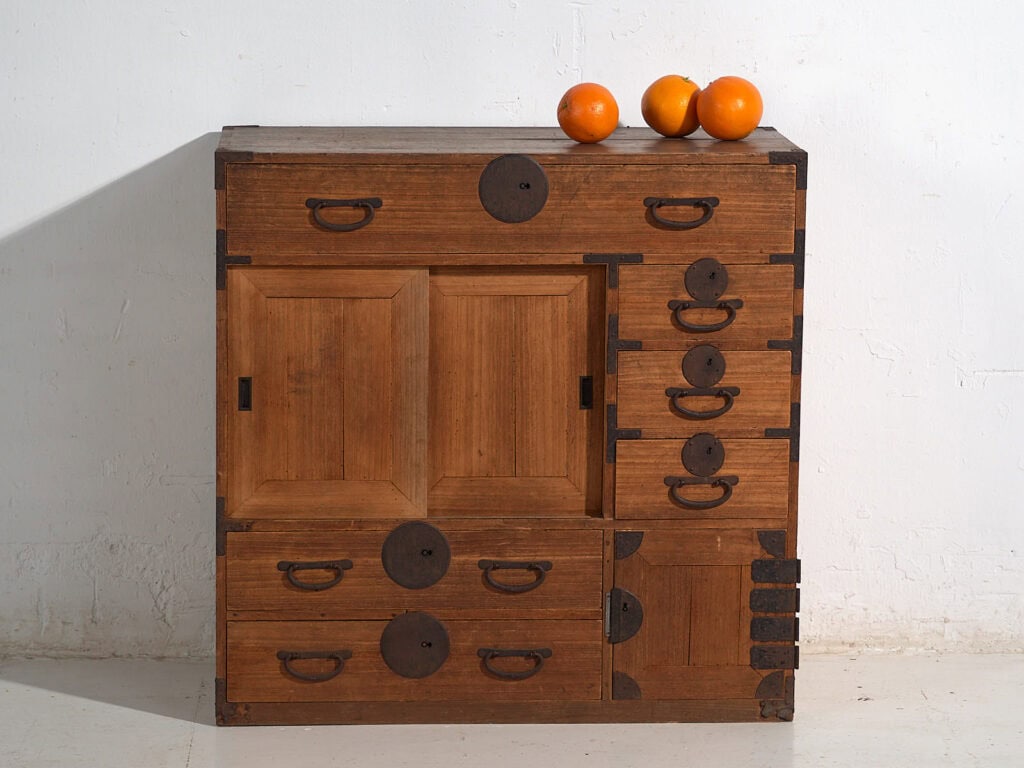
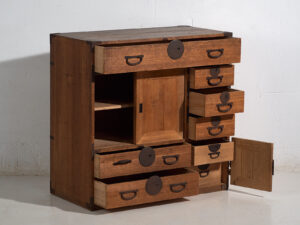
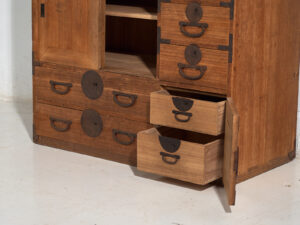
Original Japanese tansu from the Meiji period, with a compact format and well-balanced proportions, conceived as a versatile piece of domestic storage furniture. Despite its relatively modest width, the cabinet presents a rich and asymmetrical composition, combining drawers of different sizes, closed compartments, and interior storage areas arranged according to a strictly functional logic.
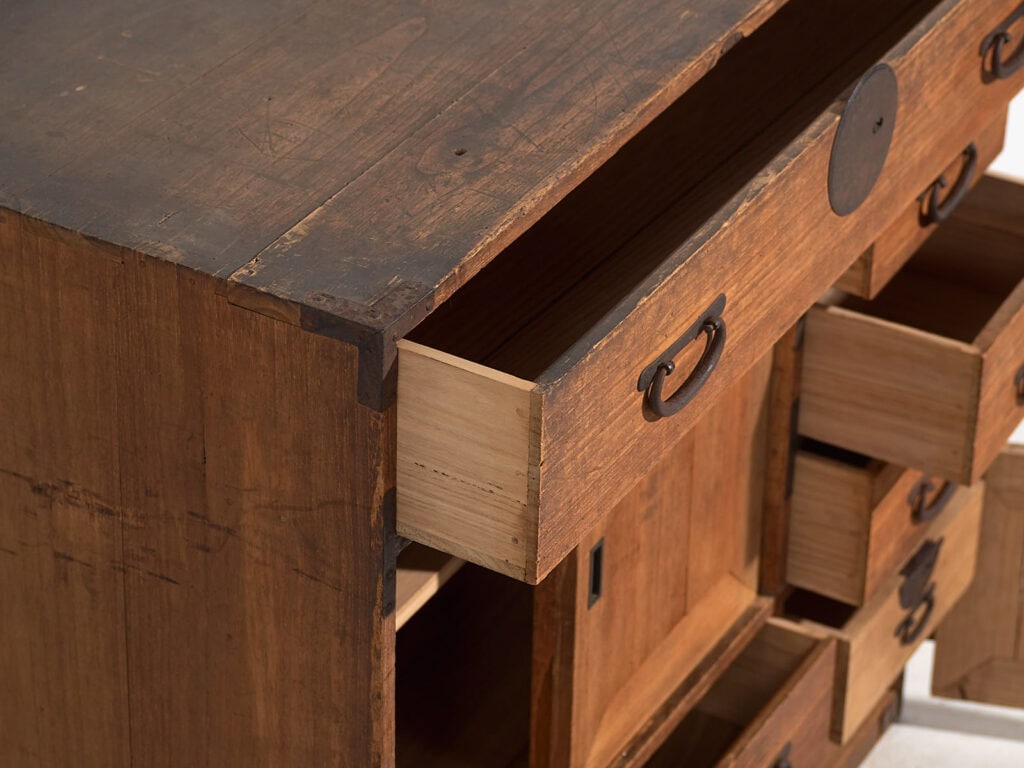
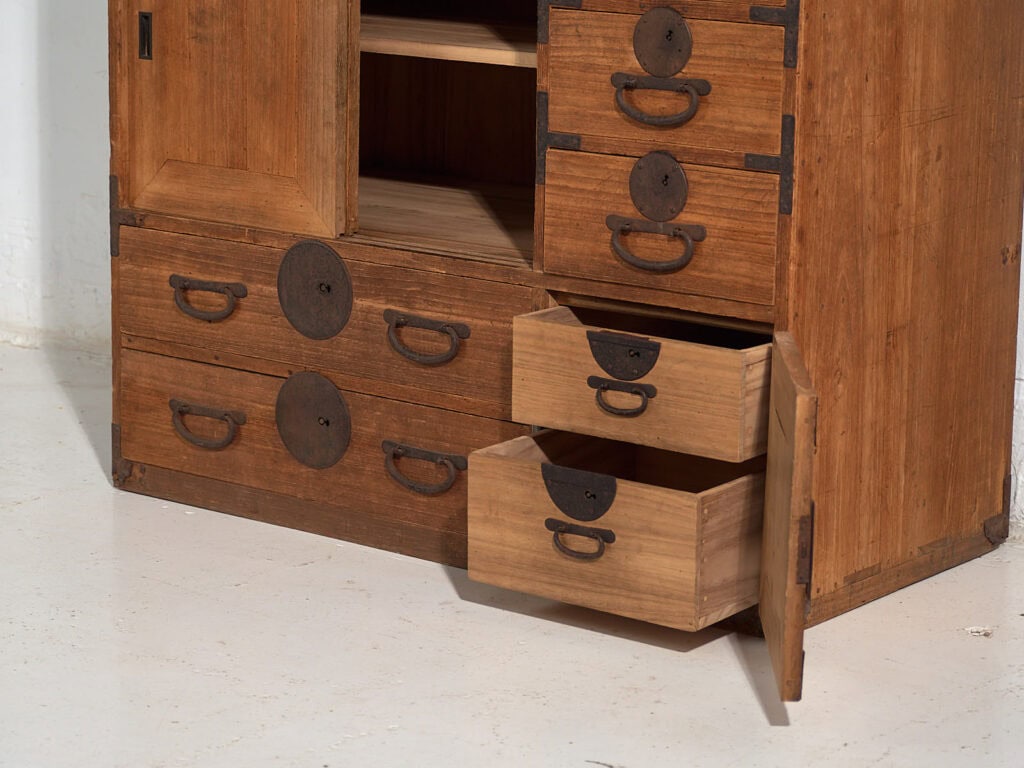
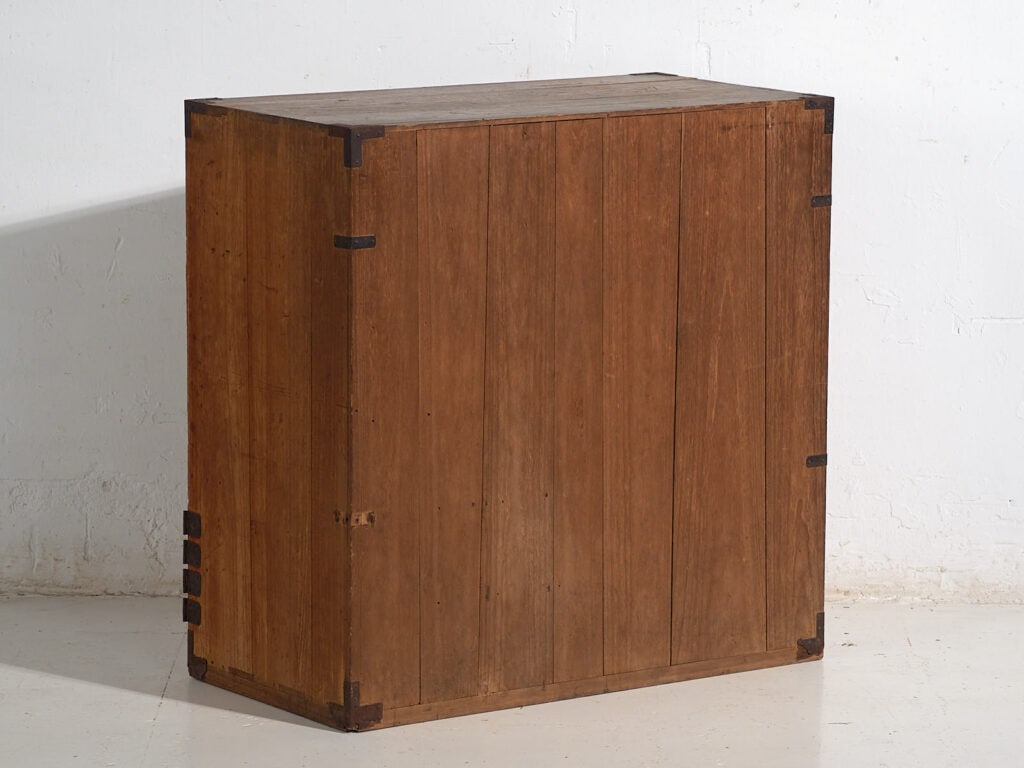
The piece is crafted in paulownia (Paulownia spp.), a lightweight and stable wood widely used in Japanese furniture for its natural resistance to humidity and long-term durability. The interiors of the drawers retain the characteristic light tone of paulownia, while the exterior surfaces display a warm and even patina acquired through decades of use.
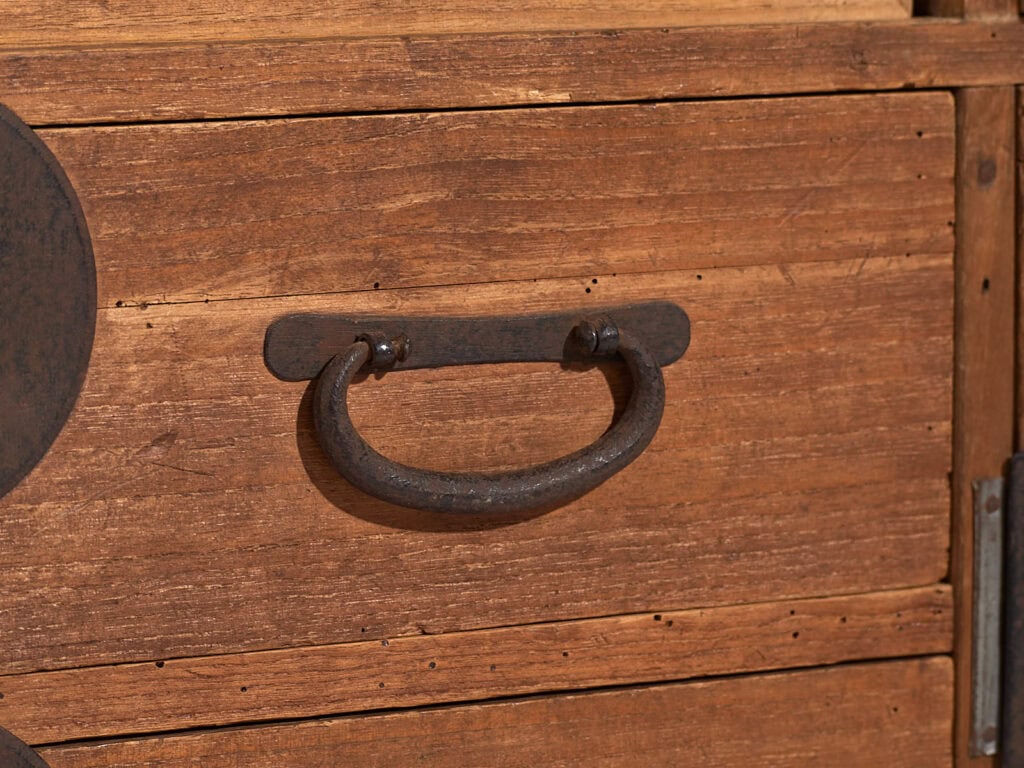
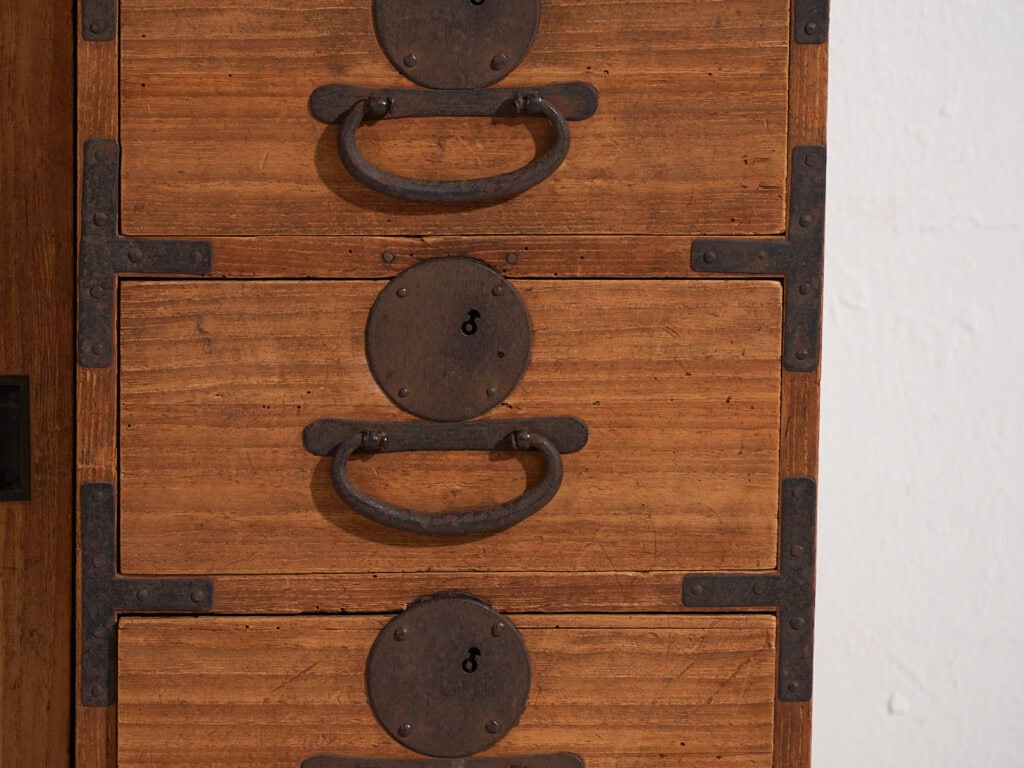
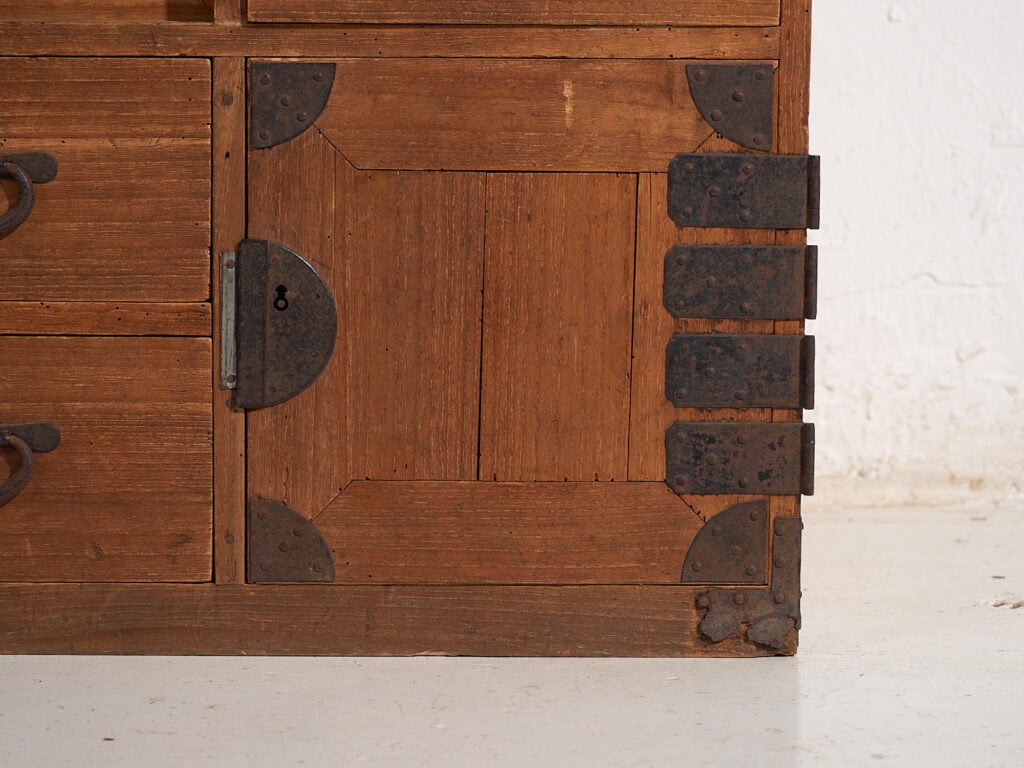
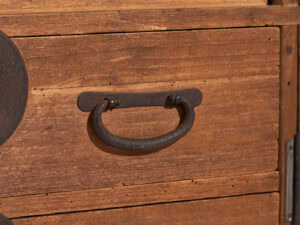
Original wrought iron fittings—including circular lock plates, drawer pulls, and corner reinforcements—articulate the façade and emphasize the graphic and architectural character of the piece. Their aged surface and uniform oxidation are consistent with the period and contribute to the overall authenticity. A sliding side door provides access to an interior compartment, completing a highly practical and well-resolved storage system.
Visible wear on the surfaces—abrasions, marks, and subtle tonal variations—is consistent with the age of the piece and forms an integral part of its wabi-sabi aesthetic, reflecting an object designed for everyday use and longevity.
With its dimensions (78 × 39 × 77 cm), this tansu is especially versatile and can function today as a low chest of drawers, entryway storage, auxiliary cabinet, or a strong focal piece in contemporary, Japanese, or eclectic interiors.
The Meiji period (1868–1912) marked a profound transformation in Japanese society, during which traditional craft techniques adapted to new forms of domestic organization. Tansu from this era are characterized by their modularity, robustness, and a rational approach to storage. The use of paulownia reflects a material culture based on lightness, mobility, and durability—essential qualities in everyday life in late 19th-century Japan.
The state of conservation is optimal, except for the characteristic imperfections of any antique produced by the passage of time.
Give a point of originality to your home with a unique piece, which merges with the contemporary style bringing personality to your home. This antique storage chest of drawers can be combined with any of our stools or with our available antique dining tables.
ONE OF A KIND

