





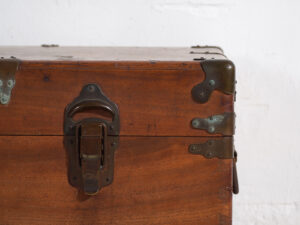


Antique Japanese trunk – Meiji / Taishō Period (c.1890-1926)
- Dimensions: Length: 89 cm Depth: 50 cm Height: 43 cm
- Style: Meiji
- Materials and techniques: Camphorwood (Cinnamomum camphora)
- Place of origin: Japan
- Epoch: Late Meiji, early Taishō period
- Date of manufacture: Circa 1890-1912
- Condition: Good. Wear commensurate with age and use.
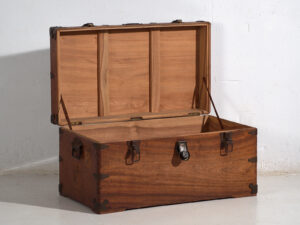
Original Japanese trunk from the Meiji period, conceived as storage and transport furniture during a key moment of transformation in Japan. As the country opened to the outside world, new practical demands emerged, giving rise to pieces designed to be robust, functional, and capable of protecting their contents over time.
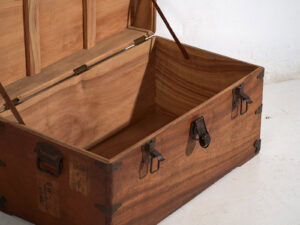
The chest is crafted from camphorwood (Cinnamomum camphora), a species traditionally valued for its aromatic qualities and natural insect-repellent properties, making it especially suitable for storing textiles, kimonos, and personal belongings. The interior retains the lighter tone and vivid grain characteristic of camphor, while the exterior displays a deep, warm patina developed through years of use.
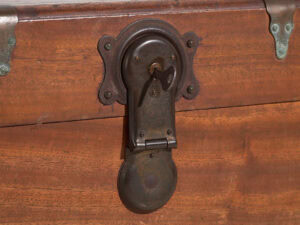
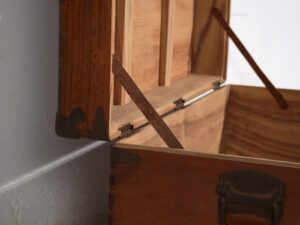
Its structure is reinforced with original metal fittings at the corners, edges, and closures, conceived to protect the piece during transport and ensure long-term durability. The hinged lid with interior support arms reflects a practical and well-resolved design, typical of Meiji-period Japanese carpentry.
Solid and honest, with a strong material presence, this chest can be used today as a storage trunk, low table, or decorative accent, bringing historical depth and character to the space.
Historical Context — Meiji Period
The Meiji period (1868–1912) marked Japan’s modernization and its opening to the Western world. While traditional woodworking techniques were preserved, new furniture typologies linked to transport, commerce, and mobility emerged. Chests such as this one embody that transition, combining reinforced construction, resistant materials, and a clear practical purpose.
The state of conservation is optimal, except for the characteristic imperfections of any antique produced by the passage of time.
ONE OF A KIND


